SADJ-S (Single Anastomosis Duodeno-Jejunal Bypass with Sleeve Gastrectomy)
SADJ is a relatively newer bariatric surgical procedure that combines a sleeve gastrectomy with an intestinal bypass. It is particularly effective for achieving significant and sustained weight loss and can also provide powerful metabolic benefits in patients with obesity and obesity-related illnesses.
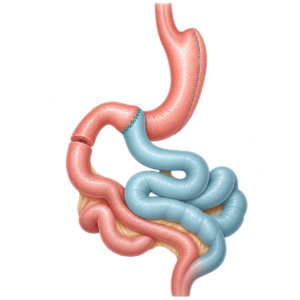
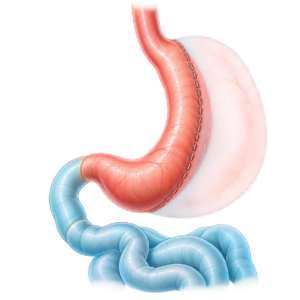
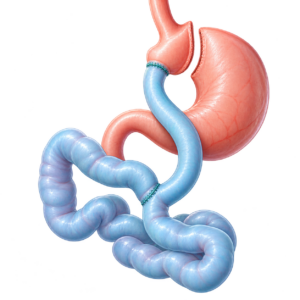
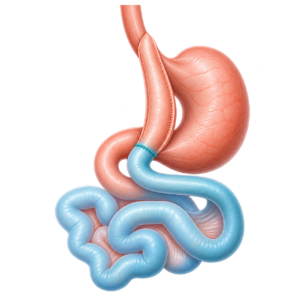
In this operation, the stomach is converted into a long, narrow gastric sleeve, reducing the capacity of the stomach and restricting food intake. The first part of the small intestine, the duodenum, is then divided just beyond the stomach. The small intestine is measured further downstream, and a loop of the ileum is brought up and connected directly to the divided duodenum, creating a single intestinal connection (anastomosis).
As a result, food passes from the smaller gastric sleeve directly into the jejunum, bypassing a significant portion of the small intestine. Bile and pancreatic digestive juices continue to travel through the bypassed portion of the intestine and mix with food further downstream. This combination of restriction, hormonal/metabolic effects and reduced nutrient absorption contributes to significant weight loss and improvement of obesity-related conditions, particularly type 2 diabetes.
One of the advantages of SADJ is that it requires only one intestinal anastomosis, compared with the two intestinal connections required in a conventional Roux-en-Y gastric bypass. SADJ-S the variant of SADI- S which is preferred by the Asian bariatric surgeons is a less intense form of the operation with less malabsorption so nutrient related issues are relatively less. Because of the relatively shorter bypassed bowel length and intact controlled pylorus the issues like loose stools and bad or odor of stool and flatus is also very much less in this procedure. This may reduce the risk of rapid gastric emptying and dumping symptoms while maintaining the metabolic benefits of intestinal bypass. It may also be considered as a revisional procedure in selected patients who have experienced inadequate weight loss or weight regain following sleeve gastrectomy.
As with any major bariatric procedure, SADJ-S has potential complications. These include anastomotic leaks, bleeding, infection, nutritional deficiencies and bowel-related complications. Because SADJ-S has a stronger malabsorptive component than sleeve gastrectomy , patients require lifelong nutritional monitoring and vitamin and mineral supplementation. Excessive or rapid weight loss, diarrhoea and fat malabsorption may occur in some patients and require dietary or medical management.
SADJ-S is a powerful bariatric procedure and is generally recommended following a detailed assessment by an experienced bariatric surgical team to determine whether it is appropriate for the individual patient.